

New Delhi : In a major push to enhance passenger safety and comfort during peak travel periods, Indian Railways has unveiled a comprehensive plan to modernize 76 high-density railway stations across the country with advanced infrastructure and technology-driven crowd management systems.
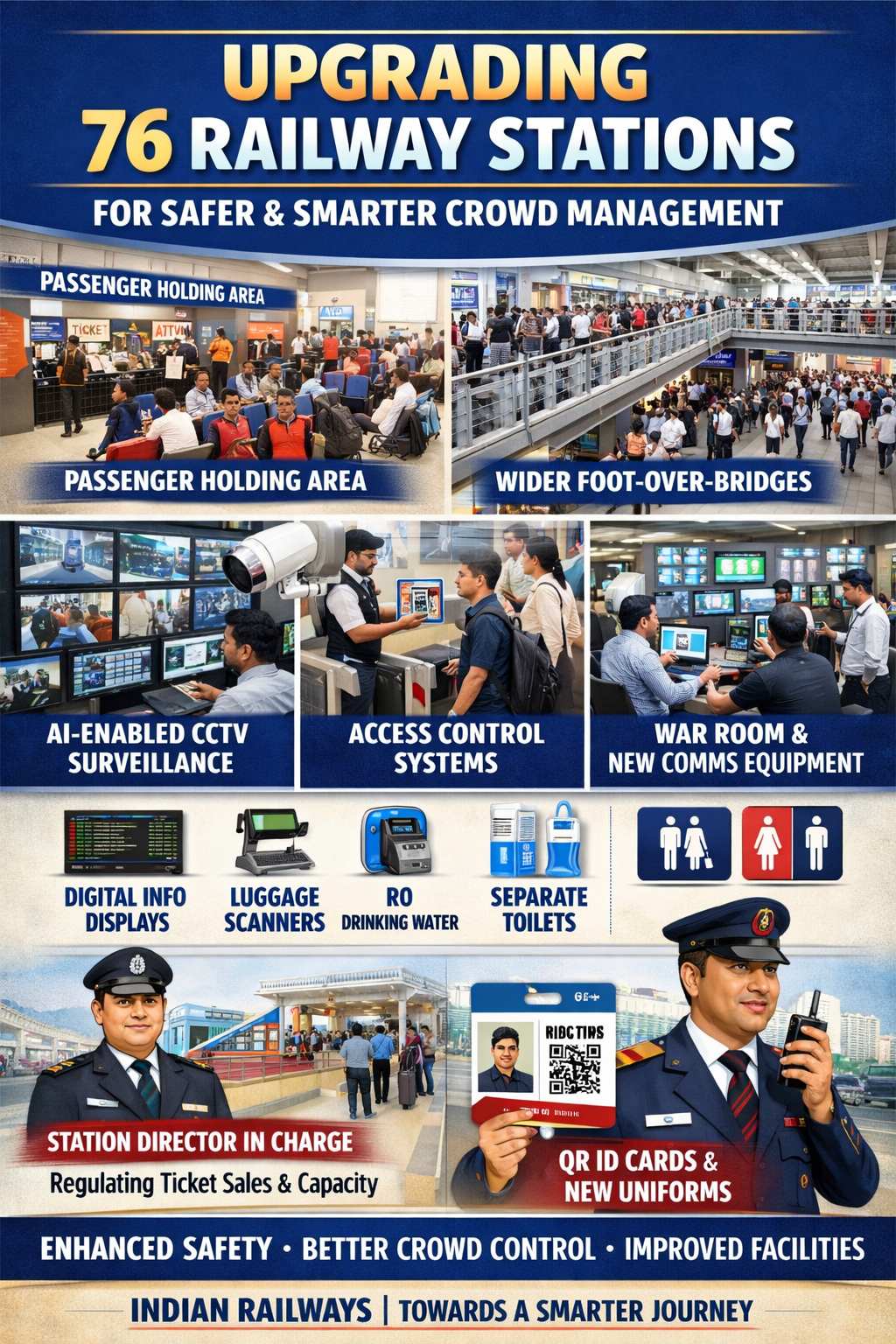
The initiative focuses on the creation of permanent passenger holding areas, designed to reduce congestion on platforms by accommodating travelers in structured, amenity-rich spaces before boarding. These areas will include seating, drinking water, toilets, ticketing facilities, digital information systems, and security checkpoints.
The model has already been successfully implemented at New Delhi Railway Station, where the holding area is operational with facilities such as additional ticket counters, Automatic Ticket Vending Machines (ATVMs), electronic train display boards, CCTV surveillance, luggage scanners, DFMDs, and RO drinking water systems, along with separate sanitation facilities for men, women, and Divyangjan passengers.
Technology & Infrastructure Upgrade
To further streamline passenger movement, Indian Railways is introducing complete access control mechanisms, allowing only confirmed ticket holders direct platform entry, while others are directed to designated waiting zones.
Additionally, new standardized wider foot-over-bridges (FOBs)—measuring 12 meters and 6 meters—are being rolled out to ease inter-platform movement and prevent bottlenecks.
A key highlight of the modernization plan is the deployment of AI-enabled CCTV systems, enabling real-time monitoring and predictive crowd management across stations and adjoining areas.
Integrated Command & Crisis Management
To ensure seamless coordination during high passenger volumes, dedicated war rooms are being established at major stations. These will house multi-departmental teams working in sync to manage operations and respond to emergencies.
Railways is also upgrading its on-ground communication with next-generation digital equipment, including advanced walkie-talkies, public announcement systems, and integrated calling systems.
Operational Reforms & Governance
In a significant administrative reform, the role of the Station Director is being strengthened. A senior अधिकारी will now have financial and operational authority, with all departments reporting directly to ensure unified command.
Importantly, Station Directors will also have the power to regulate ticket sales based on station capacity and train availability, a move aimed at preventing overcrowding during peak travel periods. To enhance security and accountability, railway staff will be equipped with QR-based ID cards and new standardized uniforms for easy identification, particularly during emergencies.