

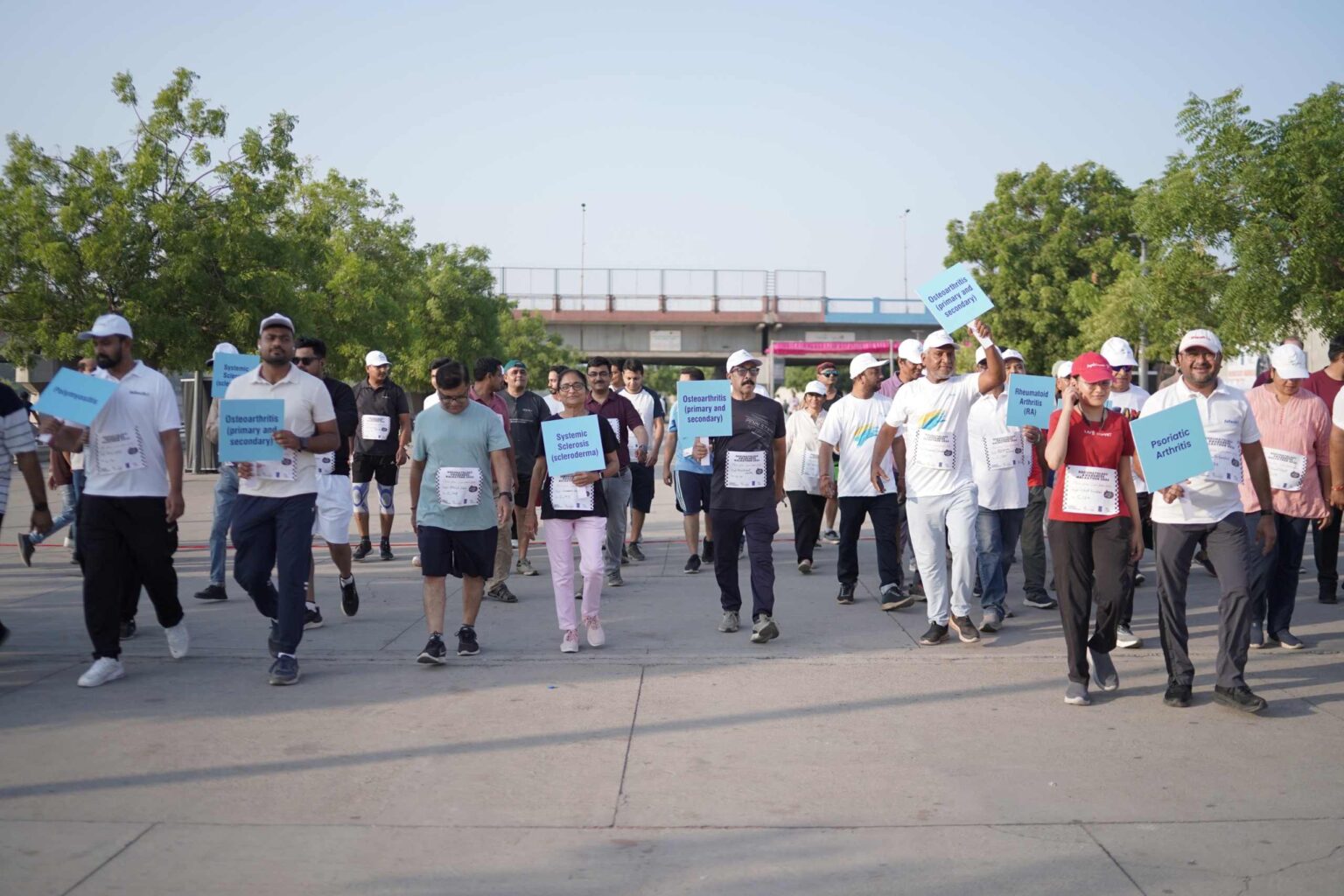

Ahmedabad : In a bid to address the growing burden of arthritis and autoimmune disorders, nearly 150 participants gathered at the Sabarmati Riverfront for the ‘Move Free. Live Pain-Free’ Rheumatology Awareness Walkathon 2026, signalling increased public engagement around joint health and early diagnosis.
The initiative was led by the Rheumatology Association of Gujarat (RAG) in collaboration with the Indian Rheumatology Association (IRA), and supported by patient advocacy group Antardhwani. The event aligns with broader efforts to improve awareness, accessibility, and long-term management of rheumatic diseases in India.
Participants completed a 3-km walk near Sardar Bridge, underlining the role of physical activity in managing chronic musculoskeletal conditions. Experts at the event emphasised that delayed diagnosis remains a key challenge, often leading to reduced quality of life and increased healthcare costs.
“Early detection and sustained mobility interventions are critical to managing rheumatic diseases effectively,” said Dr Reena Sharma, President, RAG. “Public awareness initiatives such as this help bridge the gap between symptoms and timely medical consultation.”
Dr Vishnu Sharma, Vice-President, RAG, highlighted the importance of structured care pathways. “Rheumatic conditions are increasingly manageable with early intervention, but awareness and community support remain essential enablers,” he said.
Dr Anuj Shukla, Secretary, RAG, added that lifestyle-linked interventions can complement clinical treatment. “Movement plays a therapeutic role in joint health, and community-driven initiatives can significantly improve patient outcomes,” he noted.
At the national level, IRA President Dr Aman Sharma flagged off a parallel walkathon in Chandigarh, indicating a coordinated, multi-city awareness effort. “Such synchronised campaigns are aimed at amplifying public understanding of rheumatology and encouraging early screening,” he said.
The Ahmedabad event also reflected growing patient engagement, with individuals sharing recovery journeys and caregivers acknowledging the role of peer-support platforms like Antardhwani in improving adherence and mental well-being.
The organisers indicated that follow-up initiatives, including awareness webinars and screening programmes, are being planned to sustain momentum and expand outreach.